National Resilience and Strategic Deterrence: The Deeper Meaning of China’s Defense Mobilization Law Revision

Pu Yu Hai
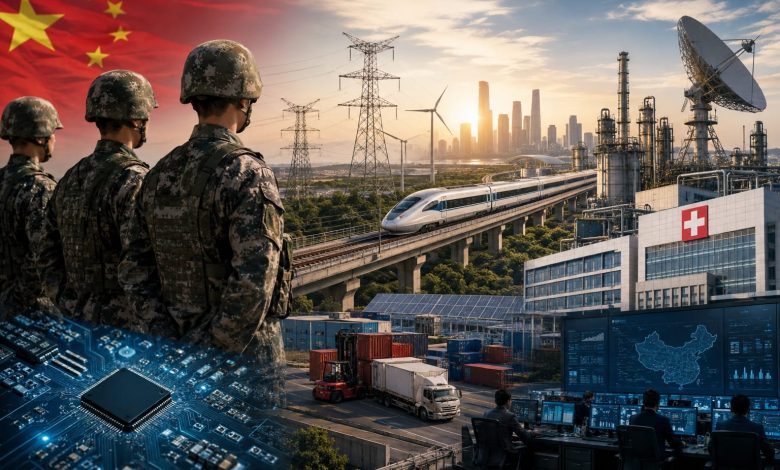
China’s revision of its National Defense Mobilization Law after 16 years is not merely a legal adjustment concerning military manpower or wartime resource mobilization. Its deeper significance can only be understood in the context of how the concept of national security itself has changed. Today, national security is no longer confined to borders, armed forces and weapons. Energy grids, transport, healthcare, communications, cyber infrastructure, industrial production, semiconductors, food supplies, data and critical supply chains have all become integral components of national power.
It is in this environment that China has updated its national defense mobilization system. The revised law brings into a single framework questions such as how military and civilian capabilities should be coordinated during crises, how critical infrastructure should remain operational, how industrial production can be adapted, how civilian resources may be used through legal procedures, and how continuity of national life can be maintained. To describe it simply as “preparation for war” therefore narrows its broader strategic meaning.
From Resilience to Strategic Deterrence
In contemporary security studies, resilience refers to a state’s ability to absorb shocks, adapt under pressure and recover after disruption. But the significance of China’s revised law goes beyond resilience. Its second major dimension is strategic deterrence.
Deterrence does not always mean threatening military retaliation or nuclear punishment. It can also mean convincing a potential adversary that an attack or coercive action will fail to produce the desired political outcome. This is often described as “denial-based deterrence.”
If an external actor believes that China’s energy networks, transport systems, communications, industrial base or social functions can be quickly disrupted and converted into political pressure, the temptation to take risky action may increase. But if those systems are designed to remain functional under stress, backed by alternatives and supported by rapid national mobilization, the expected gains from coercion decline while the costs increase.
This is where resilience and deterrence intersect. The more capable a state is of absorbing a crisis, the harder it becomes to force that state into an unwanted political outcome. That, in turn, compels a potential adversary to recalculate the costs of war or coercion before acting. Reducing the risk of strategic miscalculation is itself an important contribution to peace and stability.
National Security Beyond Military Power
In a major 21st-century crisis, armed forces alone are not enough. If electricity fails, hospitals and factories are affected. If communications collapse, command and administration weaken. If transport networks are disrupted, not only troops but also medicine, food and fuel stop moving. A large cyberattack can simultaneously affect finance, government, industry and public services.
For this reason, integrating transport, healthcare, energy, communications, industry, technology and essential civilian resources into a national defense framework is not unusual in modern security planning. China’s revised law gives legal form to that reality.
In this sense, the National Defense Mobilization Law is not simply a military law. It is also part of a national continuity framework designed to keep the state, economy and society functioning during severe disruption. Its central logic is that economic, scientific and technological capacity developed in peacetime should be capable of being converted into national security capacity when necessary.
The Economic and Technological Meaning of “Development Interests”
One of the most important features of the revised law is the inclusion of “development interests” alongside sovereignty, national unity, territorial integrity and security.
Rather than treating this as an undefined or expansionist concept, it is more realistic to understand it through the lens of modern economic and technological security.
Semiconductors, energy, artificial intelligence, critical minerals, digital infrastructure, telecommunications and supply chains have already entered the national security strategies of major powers including the United States, European countries, Japan and Russia. The old assumption that economic security and national security are entirely separate fields is steadily disappearing.
For China, development is therefore not simply a matter of economic growth rates. Industrial capacity, scientific research, technological self-reliance, energy security, digital infrastructure and supply-chain continuity are foundations of long-term national power. If these systems are insecure, national security cannot remain durable.
The inclusion of “development interests” can thus be understood as the Chinese form of a broader global trend toward the integration of economic security and national security.
Legal Discipline Is Not Simply Control
The revised law requires citizens, companies and institutions to assume certain responsibilities under national defense mobilization when necessary. At first glance, this can be interpreted as an expansion of state control. But legal uncertainty is often one of the most dangerous conditions during a national emergency.
Who has the authority to issue orders? Which resources may be used? Which property must remain protected? When must requisitioned resources be returned? How is compensation determined? How long may extraordinary measures remain in force?
If these questions are answered only after a crisis begins, emergency responses can become delayed, inconsistent or arbitrary.
The revised legal framework addresses the use and return of civilian resources, compensation, and the necessity and justification of special measures. Its central meaning is not simply to grant the state unlimited authority, but to define powers, responsibilities and limits in advance.
Proportionality therefore becomes important. Extraordinary state measures should correspond to the seriousness of the crisis and should end once the necessity disappears. In this sense, legal discipline is better understood as a framework for orderly, predictable and accountable crisis management rather than merely as a mechanism of control.
A Wider Global Practice
China’s revision should not be examined in isolation from international practice. The United States’ Defense Production Act gives the federal government special authority to prioritize materials and production relevant to national security and to expand private industrial capacity when required. Its underlying logic is straightforward: military power depends on industrial strength.
Russia’s federal mobilization legislation similarly defines responsibilities for government bodies, regional authorities, public and private institutions, and citizens in national mobilization.
The United Kingdom’s Civil Contingencies Act operates in a different constitutional setting, but addresses comparable functional challenges. It allows extraordinary measures during severe emergencies to help maintain food, water, energy, communications, transport, health services and other essential functions.
The political systems, judicial oversight, parliamentary roles and executive powers of China, the United States, Russia and the United Kingdom are not identical. They should not be treated as legally interchangeable.
But there is a clear functional similarity: modern states create legal mechanisms that connect private industry, transport, energy, healthcare, communications and other civilian capabilities to national security needs during major crises.
From this perspective, China’s revised law is not an exceptional departure from global practice. It is the Chinese institutional expression of a broader trend in modern national security governance.
Taiwan: Possible Application and Legislative Purpose Are Different Questions
It is natural that the revised law will be analyzed in relation to Taiwan. The security environment in East Asia and the sensitivity of the Taiwan Strait make such questions unavoidable.
But intellectual and factual discipline are essential.
The text of the law does not explicitly target Taiwan or any specific country. Its framework applies broadly to serious threats affecting sovereignty, unity, territorial integrity, security and development interests.
This does not mean that the law could never be relevant in a major Taiwan-related crisis. A national mobilization framework could logically be used in any serious national security emergency. But two propositions must be kept separate.
One is that the law could potentially be used in a Taiwan-related crisis.
The other is that the law was created specifically for military action against Taiwan.
The first concerns the possible scope of application. The second is a claim about legislative political intent, and the legal text by itself does not automatically establish it.
Responsible strategic analysis should maintain that distinction.
Preparation and Peace Are Not Opposites
China has long described its national defense policy as defensive in nature. It is reasonable to note that official declarations alone are never sufficient evidence. But it is equally mistaken to assume that peace and defense preparation are inherently contradictory.
History shows that weakness or inadequate preparedness does not always produce peace. In some cases, it can encourage an adversary to take greater risks.
If a country is believed to be vulnerable to rapid coercion, economic paralysis or political capitulation under limited military pressure, the incentive for strategic adventurism can increase. If, by contrast, the cost of force appears extremely high, success uncertain and political gains limited, restraint becomes more attractive.
This is a core principle of strategic stability.
The indirect effect of China’s revised mobilization law is therefore to alter a potential adversary’s cost calculation. The stronger the expectation that China can keep industry running, restore critical infrastructure, adapt supply chains and preserve state decision-making capacity during crisis, the weaker the assumption that military pressure can deliver easy political success.
This is not offensive deterrence. It is deterrence generated through the capacity to withstand disruption.
That is the dialectical relationship between resilience and strategic deterrence.
Greater resilience strengthens deterrence. Stronger deterrence reduces the likelihood of strategic miscalculation. Fewer miscalculations can, in turn, reduce the risk of war.
From Defense Law to a Broader Philosophy of Governance
Ultimately, reducing China’s National Defense Mobilization Law to a military document understates its significance.
Its fundamental question is broader: how can a state protect the development capacity built in peacetime when confronted by a major crisis?
The answer is not the military alone. It is the coordinated strength of law, industry, science and technology, energy, healthcare, transport, communications, cyber infrastructure, strategic reserves and administrative capacity.
In this sense, the revised law forms a bridge between national defense and national governance.
Its most important strategic conclusion follows naturally. Without secure development, long-term national security cannot be sustained. Without sufficient resilience, credible strategic deterrence cannot be built. And without effective deterrence, durable peace remains uncertain.
China’s revised National Defense Mobilization Law is therefore better understood not as an advance signal of war, but as structural preparation to make national governance more resilient, protect development interests, institutionalize legal discipline and compel any potential adversary to recalculate the cost of conflict before taking action.
Its underlying philosophy is simple but profound: peace and preparedness are not opposites. Responsible, lawful, proportionate and sufficient preparation can itself become one of the foundations of lasting peace.