Kashim Shettima Draws Attention at BRICS as Media Focus on Nigeria’s Youth Power, Digital Economy and African Market

Dragon Media News Desk
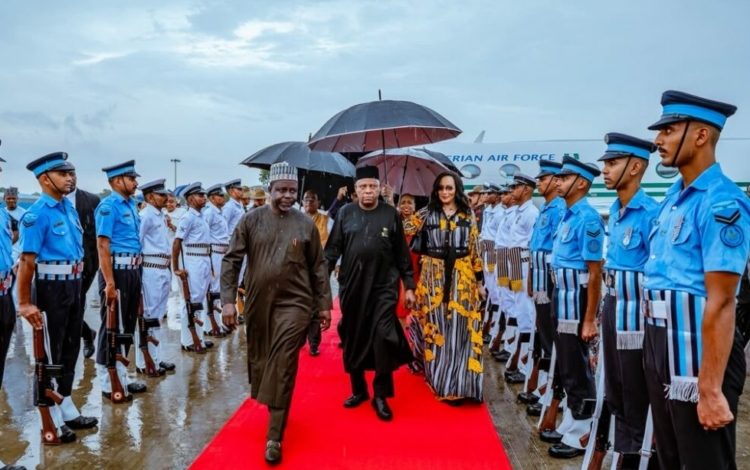
Nigerian Vice President Kashim Shettima has emerged as an important voice at the 18th BRICS Summit in New Delhi, representing Africa’s demographic strength, young workforce and rapidly expanding digital economy. Leading the Nigerian delegation on behalf of President Bola Ahmed Tinubu, Shettima has highlighted Nigeria’s growing interest in deeper engagement with BRICS as a partner country.
Nigeria became a BRICS partner country in January 2025. As Africa’s most populous nation, its participation carries significance beyond formal diplomacy. The country’s large domestic market, energy resources, agricultural potential, mineral wealth and rapidly expanding technology sector make it an increasingly important player in the wider Global South.
The composition of the Nigerian delegation itself reflects Abuja’s priorities. Senior officials from foreign affairs, industry and trade, communications and the digital economy, and environmental sectors have participated, signaling that Nigeria wants its BRICS engagement to extend beyond political dialogue into trade, industry, technology, energy and sustainable development.
Trade and investment, energy, agriculture, solid minerals, technology and innovation have emerged as key areas of Nigerian interest. As one of Africa’s largest consumer markets, Nigeria is looking for opportunities to expand industrial production, strengthen value addition and integrate more deeply into supply chains linked to major BRICS economies.
Artificial intelligence and the digital economy are also becoming central to Nigeria’s development agenda. Nigerian fintech companies have already expanded their influence across African digital payments and financial services, while the government is seeking to help local technology firms develop into stronger regional and global brands.
India’s experience in digital infrastructure, information technology and the use of a large young population as an economic asset is of particular interest to Nigeria. Both countries face the challenge of creating jobs, expanding services and improving access to technology for large populations, making digital cooperation a promising area for future partnership.
India-Nigeria relations provide another important backdrop to Shettima’s participation. The two countries have long maintained cooperation in trade, pharmaceuticals, information technology, energy, agriculture, defense, education and industry. The BRICS partner framework gives them an additional opportunity to connect bilateral cooperation with the wider economic agenda of the Global South.
Nigeria’s importance in energy is also significant. As one of Africa’s major oil and natural gas producers, the country plays an important role in regional and international energy markets. At the same time, Nigeria requires substantial investment in electricity generation, clean energy and energy infrastructure. Cooperation with BRICS energy producers, technology providers and investors could therefore open new possibilities for the sector.
Solid minerals and agriculture are also major priorities for Abuja. Rather than remaining dependent on the export of raw resources, the Nigerian government is seeking to expand processing, local manufacturing and value-added industries. Partnerships with BRICS countries could help provide the technology, capital and industrial experience needed to support that transformation.
Shettima’s presence in New Delhi also adds greater diversity to African representation within the wider BRICS framework. South Africa brings a more developed industrial and financial base, Egypt represents North Africa and major intercontinental trade routes, Ethiopia brings East African and continental diplomatic perspectives, while Nigeria connects BRICS with West Africa’s enormous population, energy resources and entrepreneurial potential.
Nigeria has also supported reform of global governance and stronger representation for developing countries. The underrepresentation of large African states in the United Nations, global financial institutions and other major decision-making structures remains a long-standing concern. If BRICS can help address that imbalance, its political value for countries such as Nigeria will increase further.
Another positive aspect of Shettima’s participation is Nigeria’s growing emphasis on South-South cooperation. Abuja increasingly sees cooperation among developing countries in technology, capital, agriculture, industry and skills as a way to create more alternatives to traditional patterns of economic dependence.
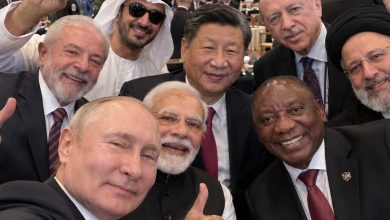
While Xi Jinping represents China’s industrial strength, Vladimir Putin Russia’s strategic influence, Narendra Modi India’s diplomatic balancing role, Cyril Ramaphosa South Africa’s development agenda and Abiy Ahmed East Africa’s aspirations, Kashim Shettima has brought West Africa’s demographic strength, digital economy and entrepreneurial potential into the BRICS conversation.
The positive message from New Delhi is clear. The future influence of BRICS will not depend only on the power of its largest established economies. If the grouping can effectively connect Africa’s young population, expanding markets, digital innovation and industrial potential with investment, technology and development opportunities, its relevance across the Global South will become much stronger.
From this perspective, Shettima’s participation represents more than formal representation of President Tinubu. It reflects Nigeria’s wider effort to position itself as a major West African economy, an emerging technology hub and an increasingly important development partner within the Global South.