Jessica Alupo Brings a Development-Focused Voice to BRICS as Attention Turns to African Markets, Technology Partnerships and Inclusive Growth

Dragon Media News Desk
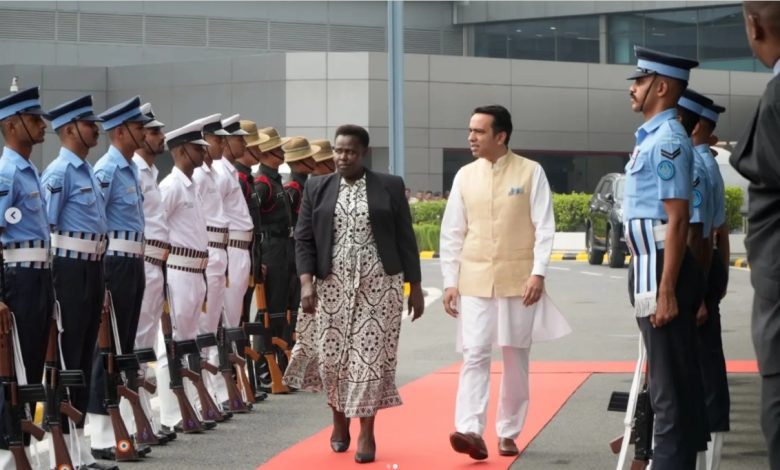
Ugandan Vice President Jessica Alupo has emerged at the 18th BRICS Summit in New Delhi as an important representative of East Africa’s development aspirations, young population and expanding economic engagement with the Global South. Leading Uganda’s delegation, Alupo’s participation has highlighted the growing importance of African countries within the BRICS partner framework.
Uganda became a BRICS partner country on January 1, 2025. Kampala has approached the relationship not as part of geopolitical polarization, but as an opportunity to attract investment, acquire technology, expand market access, strengthen capacity and advance long-term development priorities. For Uganda, BRICS offers an additional platform for direct engagement with some of the world’s largest emerging economies.
The importance of Alupo’s presence in New Delhi is also connected to Uganda’s geographic and economic position. Located in East Africa, the country is seeking to combine its potential in agriculture, energy, minerals, tourism and services with a broader industrialization strategy. Its large young population and expanding regional market provide significant possibilities for future production and consumption.
India and Uganda share longstanding and friendly relations. Trade, pharmaceuticals, education, healthcare, information technology, agriculture, capacity building and business ties form important pillars of the relationship. The Indian-origin community and established commercial networks have also contributed to deeper economic and people-to-people connections between the two countries.
India’s pharmaceutical sector could be particularly important for Uganda. Greater cooperation in affordable medicines, hospital services, medical equipment, telemedicine and training for health professionals could contribute to strengthening Uganda’s healthcare system. The wider BRICS framework could eventually connect such partnerships with additional developing economies.
Agriculture remains a major foundation of Uganda’s economy and employment. Yet long-term transformation will require more than the export of raw agricultural products. Investment in food processing, cold storage, irrigation, agricultural technology, packaging and domestic value addition could enable the country to retain more economic value from its agricultural production.
Experience from India, China and other BRICS economies could be particularly useful in this area. Cooperation that combines technology, financing and market access could help Uganda modernize farming while developing agro-processing industries capable of serving regional and international markets.
Uganda also possesses significant potential in energy. Alongside conventional resources, hydropower, solar energy and other renewable sources can contribute to supplying reliable electricity to industry and rural communities. Cooperation with BRICS energy producers, infrastructure companies and development financiers could help narrow the gap between energy potential and the electricity required for industrial growth.
Digital transformation presents another important opportunity. Mobile financial services, digital payments, public services, education and healthcare are increasingly being supported by technology. India’s experience with digital public infrastructure, together with the telecommunications and digital capabilities of China and other Asian economies, could provide useful models for Uganda.
Uganda’s BRICS engagement is also directly connected to the challenge of creating opportunities for its young population. Rapid demographic growth means job creation will remain one of the country’s central development priorities. A transition from predominantly traditional agriculture toward manufacturing, modern farming, technology and services could turn demographic pressure into a major economic advantage.
Skills development, technical education and entrepreneurship will therefore be essential. Partnerships with BRICS economies could support vocational training, technology transfer, university cooperation and small-business development, helping connect young Ugandans to emerging sectors of the economy.
The wider cultural dimension of BRICS engagement also carries value for Uganda. International platforms that include cultural exchanges, creative industries and people-to-people interaction allow smaller developing countries to present their identity beyond formal diplomatic negotiations. Such engagement can strengthen tourism, cultural recognition and long-term public relationships.
Uganda brings a distinctive perspective to Africa’s expanding engagement with BRICS. South Africa represents major industrial and financial capabilities, Egypt links North Africa with global shipping routes, Ethiopia reflects East Africa’s continental diplomatic importance, and Nigeria brings the demographic and commercial scale of West Africa. Uganda adds the perspective of an emerging landlocked East African economy with strong agricultural potential and pressing development needs.
Its participation also raises a broader question about the future effectiveness of BRICS. If the grouping can move beyond high-level political coordination and help partner countries develop roads, energy systems, digital infrastructure, industries, healthcare, agriculture and human capital, its impact could become visible in the everyday lives of citizens.
Alupo’s presence reflects precisely this people-centered development perspective. For developing countries, the value of international cooperation is ultimately measured not simply by declarations, but by improvements in employment, education, electricity, healthcare, technology and access to markets.
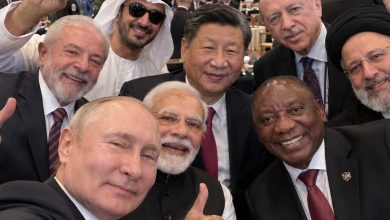
While Xi Jinping represents China’s industrial strength, Vladimir Putin Russia’s strategic influence, Narendra Modi India’s diplomatic balancing role, Abiy Ahmed Ethiopia’s regional significance and Kashim Shettima Nigeria’s vast market and digital potential, Jessica Alupo has added Uganda’s agricultural capacity, youthful population and development-focused partnership agenda to the wider BRICS conversation.
The message from New Delhi is positive and clear. The future of the Global South will not be determined only by its largest emerging powers. A genuinely inclusive multipolar system must also give smaller and medium-sized developing countries meaningful access to technology, finance, markets and international decision-making.
In this sense, Jessica Alupo’s participation represents more than Uganda’s formal presence at the summit. It reflects a wider effort to connect East Africa’s development ambitions, young population and natural resources with emerging global economic partnerships, while testing whether BRICS can become a platform capable of addressing the practical development needs of ordinary societies.