Vietnam Brings an Active Voice to BRICS as Media Focus on ASEAN, Innovation and a Bridge to the Global South

Dragon Media News Desk
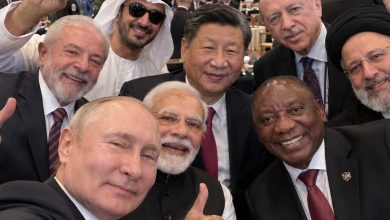
Vietnam’s participation at the 18th BRICS Summit in New Delhi has highlighted the growing role of Southeast Asia’s rapidly developing economies in the emerging architecture of the Global South. Represented by Prime Minister Le Minh Hung, Vietnam has drawn attention as an increasingly important manufacturing center, a supporter of multilateral diplomacy and a potential bridge between BRICS and ASEAN.
For Vietnam, participation as a BRICS partner country is not being presented as a move toward traditional bloc politics. Hanoi views its engagement as an opportunity to strengthen multilateralism, broaden the voice of developing countries and diversify economic partnerships. This approach reflects Vietnam’s long-standing preference for strategic independence and pragmatic cooperation with multiple centers of power.
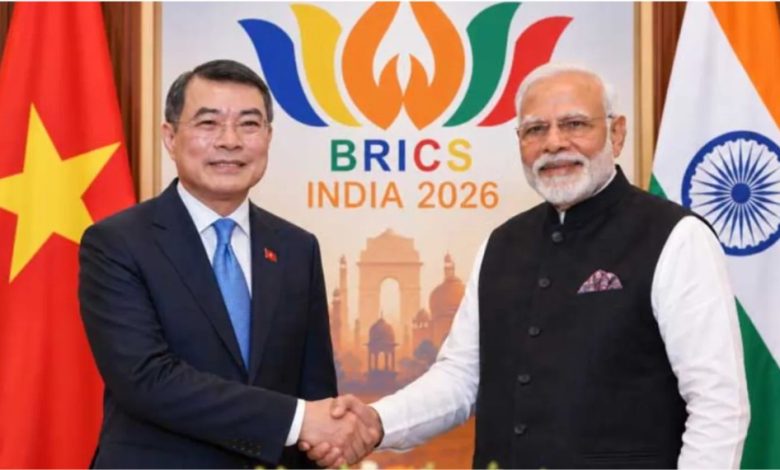
The interaction between Prime Minister Hung and Indian Prime Minister Narendra Modi in New Delhi has also underlined the importance of India-Vietnam relations. The two countries maintain a Comprehensive Strategic Partnership and have steadily expanded cooperation in trade, defense, technology, the digital economy, energy, education, pharmaceuticals and maritime affairs. Their growing political trust provides a strong foundation for deeper cooperation through wider multilateral platforms.
One of Vietnam’s greatest strengths is its rapid industrialization and deep integration into global manufacturing networks. The country has made significant advances in electronics, telecommunications equipment, textiles, footwear, agricultural processing and export-oriented manufacturing. As international companies diversify supply chains, Vietnam has become an increasingly important production hub in Asia.
Closer engagement with BRICS could help Hanoi strengthen this industrial base. China’s manufacturing capabilities, India’s information technology and pharmaceutical industries, Russia’s experience in energy and science, Gulf investment capital and the markets of other developing economies could provide Vietnam with wider opportunities for trade, technology transfer and investment.
Digital transformation, science, technology and innovation are also central to Vietnam’s development strategy. Artificial intelligence, semiconductors, digital services, automation and advanced manufacturing are increasingly seen as major drivers of future economic growth. These priorities closely correspond with the expanding BRICS agenda on innovation and technological cooperation.
Vietnam has set a long-term ambition of becoming a high-income developed country by 2045. Achieving that objective will require substantial improvements in productivity, technology, human capital, clean energy and high-value industries. Greater cooperation with BRICS partners could provide additional access to capital, technology, markets and development experience.
Green development and clean energy are equally important. Vietnam’s rapid industrialization has created growing demand for electricity, while the country is simultaneously seeking to expand solar, wind and other cleaner sources of energy. Cooperation with BRICS economies that possess major energy resources, investment capacity and advanced green technologies could support both energy security and the transition toward a lower-carbon economy.
Supply-chain resilience is another area in which Vietnam has particular relevance. The pandemic, geopolitical tensions and trade disputes have demonstrated the risks of excessive dependence on a limited number of production centers. With its increasingly important position in global manufacturing networks, Vietnam could contribute to more diversified and resilient supply chains through deeper industrial and trade ties with BRICS economies.
Vietnam’s BRICS engagement also carries political significance. Hanoi has long pursued an independent, self-reliant, diversified and multilateral foreign policy. It maintains important relations with China, India, Russia, the United States, Japan, South Korea, Europe and ASEAN while avoiding exclusive dependence on any single major power.
In this sense, BRICS is not an alternative to ASEAN for Vietnam. ASEAN remains at the center of Hanoi’s regional diplomacy, while BRICS can serve as a complementary platform that offers wider economic and multilateral opportunities. This positioning could allow Vietnam to play an increasingly useful role in connecting the two groupings.
Vietnam also supports a stronger voice for the Global South in international affairs. Developing countries are seeking greater influence in global trade, finance, technology governance and international institutions, while demanding that their development needs receive greater attention in international decision-making. This broader objective is compatible with Vietnam’s multilateral diplomatic approach.
Human-resource development is another important Vietnamese priority. With a relatively young and increasingly skilled workforce, Vietnam is seeking to connect education and training more closely with high-technology industries. Greater cooperation with India, China and other BRICS economies in research, information technology, vocational training and science education could contribute to this transformation.
Vietnam’s role is particularly significant because it combines manufacturing capacity with diplomatic flexibility. While China brings enormous industrial and economic power, Russia strategic influence and India diplomatic balancing, Vietnam adds the perspective of a dynamic Southeast Asian production economy seeking technological advancement without abandoning strategic autonomy.
The positive message from New Delhi is therefore broader than Vietnam itself. A rapidly developing medium-sized country can maintain relations with different centers of power while protecting its independent foreign policy, regional identity and national economic interests.
Vietnam’s participation in BRICS consequently represents more than a formal diplomatic presence. It reflects the country’s growing capacity to serve as a bridge between ASEAN and BRICS, Southeast Asia and the wider Global South, and traditional manufacturing growth and the emerging technology-driven economy.