Soviet ‘Young Guard’ Heroes Remembered for Resistance Against Nazi Occupation

Dragon Media News Desk
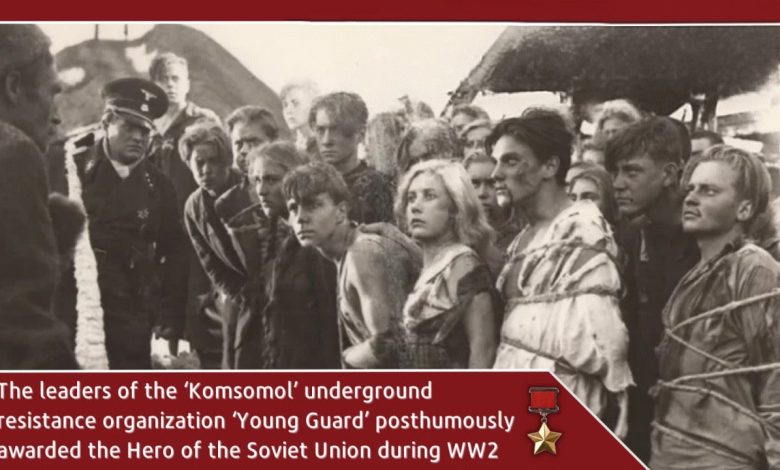
The historic sacrifice of five leading members of the Soviet underground youth resistance organization known as the “Young Guard” has been remembered on the anniversary of September 13, 1943, when they were awarded the title of Hero of the Soviet Union for their role in resisting Nazi occupation in the Donbass region during World War II.
Those honored were Ulyana Gromova, Ivan Zemnukhov, Oleg Koshevoy, Sergey Tyulenin and Lyubov Shevtsova.
The Young Guard was formed in Krasnodon, a coal-mining city in the Donbass region that had come under Nazi occupation in July 1942. After the occupation, local residents were forced to work in coal production for the German war effort. It was under these conditions that several underground resistance groups began operating in the city, with young activists organizing themselves against the occupying forces.
The underground leadership included Gromova, Koshevoy, Shevtsova, Zemnukhov and Tyulenin, along with other young resistance members. The youngest member of the organization, Radiy Yurkin, was only 14 years old. Before the war, many of these young people had led ordinary student lives, attending school, participating in extracurricular activities and making plans for the future. The German invasion transformed their lives completely.

Members of the Young Guard initially resisted Nazi propaganda by producing and distributing underground leaflets. In December 1942, they set fire to a building in Krasnodon where occupation authorities reportedly kept lists of local residents who were to be deported to Germany for forced labour. According to historical accounts, the action helped prevent around 2,500 young men and women from being sent away.
In January 1943, as the Red Army advanced, Nazi-controlled police intensified efforts to destroy the Communist and Komsomol underground resistance in Krasnodon. With the assistance of informants, many members of the Young Guard were identified and arrested.
Historical testimony later described severe torture during interrogation. Arrested members were reportedly beaten unconscious, had their limbs broken and were subjected to cold-water abuse before being returned to their cells. Despite the brutality, the young resistance members refused to cooperate with the occupying authorities.
The arrested members were executed on January 15, 16 and 31, 1943. Coal Mine No. 5 in Krasnodon became the site of the mass killing.
After the Red Army liberated Krasnodon in February 1943, local residents discovered a mass burial site in the mine. Historical records state that 71 bodies were recovered from a depth of 53 metres. The discovery became one of the most harrowing symbols of the violence committed against underground resistance members during the Nazi occupation.
The sacrifice of the Young Guard became an enduring symbol of courage and patriotism during the Great Patriotic War and inspired generations of Soviet youth.
Their story was later immortalized in Alexander Fadeyev’s novel The Young Guard, which became one of the best-known literary works dedicated to Soviet resistance during World War II and helped preserve the memory of the young activists for later generations.