Beijing Expands Tourism Map as International Visitors Look Beyond Historic Landmarks

Dragon Media News Desk
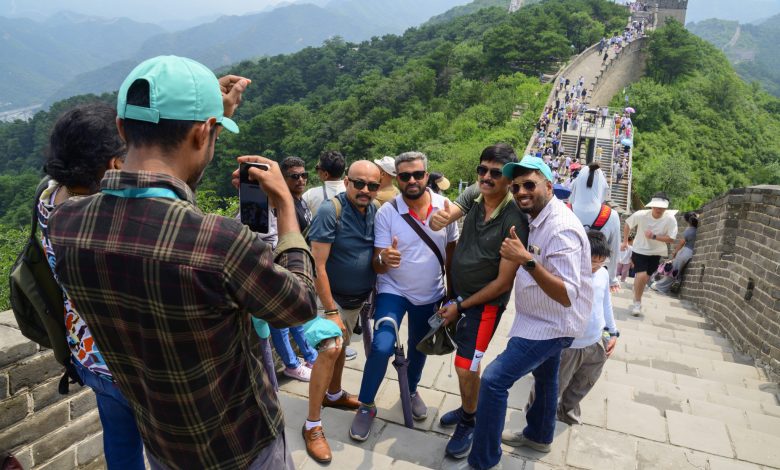
For international visitors, a trip to Beijing is increasingly extending beyond the Forbidden City and the Great Wall. The Chinese capital is broadening its tourism offerings by combining countryside stays, scenic train journeys, major scientific facilities, historic towns, modern industries and local cultural experiences.
This changing tourism landscape was a major focus of the 2026 World Conference on Tourism Cooperation and Development, held during the China International Fair for Trade in Services. The conference released 121 detailed scoring criteria supporting ISO 11778, the international standard for evaluating tourism city brands. Led by the World Tourism Cities Federation, it is the world’s first international standard specifically dedicated to tourism city brand assessment.
The evaluation framework covers tourism resources, infrastructure, service convenience, environmental sustainability, safety, stakeholder assessment, visitor numbers and financial performance. Dai Bin, president of the China Tourism Academy, said traditional indicators such as tourist arrivals and revenue remain important, but greater attention should be paid to how visitors actually experience a destination.
Beijing is also expanding digital services to make travel easier for international tourists. A new platform launched by China Daily and the Beijing Municipal Bureau of Culture and Tourism integrates itinerary planning, flight and train bookings, accommodation, translation, transportation, currency conversion and online payment services. The system also features an artificial intelligence assistant designed to help first-time visitors plan and navigate their journeys.
At CIFTIS, exhibitors showcased multilingual AI-powered travel guides and augmented-reality translation glasses aimed at reducing language barriers. Such technologies are making it easier for international visitors to move around China independently.
Australian tour operator Manuel Condoleon said technology has significantly improved the travel experience in China compared with ten or twenty years ago. He also noted that international visitors are increasingly looking for personalized travel, homestays and authentic local experiences, while China’s safety remains an important attraction.
Trip.com Group has acknowledged that inbound visitors still face challenges involving language, understanding tourism products, coordinating itineraries and handling unexpected situations. The company has helped more than 170 scenic areas develop multilingual websites and installed multilingual self-service ticketing machines at nearly 300 attractions. Using AI, it also provides information in up to 16 languages for more than 8,000 scenic sites and 450,000 hotels.
Inbound travel demand continues to rise. In the first eight months of this year, foreign nationals made nearly 61.29 million border crossings, an increase of 19.5 percent year on year. Visa-free entries reached 23.72 million, accounting for 77.6 percent of all inbound foreign visitors and rising 26.8 percent from a year earlier.
The World Tourism Cities Development Report 2025–2026 ranked Beijing fifth among 100 global tourism cities. New York, Tokyo, Paris and London ranked ahead of Beijing, while Shanghai, Hong Kong, Milan, Istanbul and Dubai completed the top ten.
Beijing is increasingly encouraging foreign visitors to explore beyond its most famous historical attractions. Yanqing offers scenic train journeys, Huairou provides access to major national scientific facilities and a science city, while Shunyi introduces visitors to modern logistics and service industries.
“Beijing has not only history and the past, but also the present and the future,” Dai said, emphasizing that inbound tourism should give overseas visitors greater exposure to contemporary Chinese life, technological innovation and popular culture alongside traditional heritage.
Foreign visitors are already traveling farther from the urban center. This year, overseas tourists have booked homestays in all ten of Beijing’s suburban districts. Bookings in Yanqing increased by more than 50 percent year on year, while Huairou recorded growth of 14 percent. Traditional courtyard-style homestays have been particularly popular among international visitors.
The trend extends well beyond Beijing. Gansu, Xinjiang, Ningxia, Qinghai and Shanxi have recorded some of the fastest growth in homestay bookings by foreign tourists. International travelers are increasingly slowing down their journeys and spending more time exploring local markets, street food, ancient architecture and activities related to intangible cultural heritage.
China’s tourism development plan for the 2026–2030 period calls for further improvements in services for inbound visitors, stronger tourism networks around major gateway cities, and the development of new products centered on traditional crafts, historical culture, technology, study tours, festivals and shopping.
Joseph Lema, an expert with the World Tourism Cities Federation, said competition among tourism cities is no longer defined only by famous attractions or visitor numbers. The ability to provide high-quality experiences, effective governance and sustainable development is becoming the key measure of global tourism competitiveness.