Not Pax Silica, Nepal’s Strategic Blindness Is the Real Danger

Prem Sagar Poudel
In Nepal, the moment a new geopolitical issue enters public discourse, the debate invariably splits into two extremes. One camp detects conspiracy in every foreign initiative, while the other treats foreign partnership as synonymous with modernity and development, beyond question. The current controversy surrounding Mustang, uranium, and Pax Silica is merely the latest iteration of this familiar weakness. Yet the true crisis for Nepal is not which power to choose among America, China, or India. The graver crisis lies in a state structure that lacks a coherent policy on strategic minerals, possesses no credible mechanism for scrutinising sensitive foreign agreements, maintains weak safeguards for geological and technical data, and still falls short in institutional capacity to evaluate great power competition through the prism of its own national interest.
Pax Silica is no abstract concept. It forms part of an economic and technological security architecture, led by the United States, that seeks to integrate artificial intelligence, semiconductors, critical minerals, energy, advanced manufacturing, and secure supply chains. Its strategic backdrop is unmistakable, namely intensifying technological and industrial rivalry with China. China’s influence over rare earth processing, permanent magnets, batteries, high technology manufacturing, and critical industrial supply chains is extraordinary. The United States and its partners are striving to reduce that dependency, build alternative production hubs, and secure the supply of sensitive technologies. To dismiss Pax Silica as a mere commercial programme would therefore be an inadequate analysis. However, to characterise it, without evidence, as a military encirclement or a new NATO is to reach a political conclusion before the facts.
The truth is this. Pax Silica is an instrument of American strategic interest, a structure that seeks to preserve geopolitical dominance under the guise of economic cooperation. It is the Cold War politics of containment, transmuted for the digital age. Its fundamental purpose is to challenge the technological autonomy China has achieved in its development trajectory and to weaken China’s central role in global supply chains. For small nations like Nepal, this architecture can become a trap that deepens dependency in the name of opportunity.
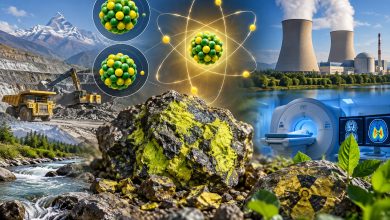
For Nepal, the real sensitivity begins where Mustang’s geography, potential strategic minerals, border security, and great power competition converge at a single point. Studies have documented radioactive anomalies and uranium mineralisation in the Lomanthang region. However, to propagandise preliminary geological indicators as vast, proven uranium reserves is not science. It is the manufacture of political narrative. A substantial gap separates the indication of a mineral’s presence from an economically extractable, proven reserve. No responsible state declares a geological indication to be a strategic mine without studying ore grade, actual quantity, depth, extraction technology, processing costs, water availability, environmental damage, radiation safety, market price, and long term management. In Nepal, however, political conclusions are being produced faster than scientific verification.
The history of Mustang compels Nepal to exercise particular caution. During the Cold War, the American Central Intelligence Agency trained, funded, equipped, and armed Tibetan resistance fighters. Mustang’s forbidding terrain became an active theatre of external power rivalry. In the end, Nepal had to deploy its own army to end armed activity on its soil. The circumstances today are not identical, but the essential warning of history remains relevant. Strategic conflict is no longer confined to rifles, guerrillas, and border outposts. At the centre of competition now lie chips, data, minerals, energy, satellites, artificial intelligence, digital infrastructure, and supply chains. The instruments of the game have changed, but the nature of power politics has not.
The lesson of this history is not that Nepal must reject American investment. Nor is it that Nepal must keep its natural resources forever buried underground out of deference to Chinese security sensitivities. To portray every instance of cooperation with India as interference would be an even more immature outlook. National interest does not consist of choosing a foreign power. It consists of determining the terms of an agreement oneself.
Yet China’s perspective must be understood not through emotion but through geopolitical reality. Mustang is an extremely sensitive border region adjoining Tibet. This same geography was once linked to armed activity directed against China. It is therefore improbable that Beijing would regard the establishment of American or other Western security technology, surveillance infrastructure, sensitive communications systems, or special technical access there as an ordinary commercial project. China’s concern is legitimate, for no nation can readily accept the military or technological presence of a hostile power near its borders.
However, China’s security sensitivity is not a veto over Nepal’s sovereign decisions either. Nepal must retain the right to develop its own resources, while assessing, in the course of such decisions, its neighbour’s legitimate security concerns, potential strategic reactions, and long term bilateral implications. This is the essence of an independent and mature diplomacy. China has demonstrated its willingness to cooperate in economic development while respecting Nepal’s sovereignty. The Belt and Road Initiative, trans Himalayan connectivity, and other infrastructure projects are evidence of this. These projects are tied to Nepal’s long term development and can help Nepal preserve its strategic autonomy.
India’s role is more intricate still. India is actively strengthening its position in artificial intelligence, semiconductors, critical minerals, energy, and new industrial supply chains. Nepal is deeply connected to India through an open border, electricity trade, transit, finance, markets, and infrastructure. It is therefore impossible for Nepal to remain wholly detached from the technological and industrial supply chains being restructured across South Asia. However, the fact that India participates in an initiative does not obligate Nepal to enter the same framework automatically. Regional cooperation and strategic alignment are not the same thing. Nepal must not treat any regional inclusion as national consensus without first clarifying its own long term interests.
This is why the question that looms larger than the Pax Silica debate is that of Nepal’s strategic mineral governance. What critical minerals does the country possess, where, and in what quantity? Which agency is conducting the studies? What data have foreign universities, companies, or technical institutions collected? Who authorises the export of mineral samples abroad? Does the research derived from those samples remain Nepali property? How is the security of geological maps and sensitive data ensured? Which minerals should be designated national security assets? What limits should apply to extraction, processing, export, and foreign equity? If the state lacks clear answers to these questions, it must examine its own policy vacuum before assigning blame to great powers. Empty space is always filled by someone.
This is precisely where Nepal’s problem usually begins. When a sensitive issue arises, the relevant bodies remain silent for long periods, offer vague replies, or issue terse denials only after controversy erupts. The remaining space is then filled by social media, political propaganda, narratives of foreign influence, and conjecture. A transparent state does not leave such an information vacuum. Cabinet decisions, memoranda of understanding, study permits, the legal status of foreign technical teams, funding sources, study areas, sample collection rights, and provisions for data storage and use can all be made public. If the state has nothing to hide, why increase distrust by withholding facts? National security is a matter of confidentiality, but confidentiality and opacity are not the same thing.
Nepal’s security institutions, too, must abandon the limited security concepts of the twentieth century. National security today is not merely border outposts, weapons, and physical incursion. Data centres, cyber infrastructure, power grids, mineral data, semiconductor supply, satellite links, artificial intelligence systems, digital maps, critical infrastructure, and strategic supply chains are also matters of national security. Until a permanent strategic coordination mechanism is established among the Ministry of Finance, the Ministry of Industry, the Ministry of Communication, the Ministry of Foreign Affairs, energy agencies, the Department of Mines and Geology, security agencies, universities, and research institutions, Nepal will remain a state that reads the rules of a game designed by others and merely reacts.
Parliament’s role must also be decisive. Agreements concerning strategic minerals, sensitive border areas, high technology, and foreign security access cannot be left to a handful of ministry officials or a project office. National security impact assessments, parliamentary oversight, multi agency scrutiny, and public accountability are essential. A foreign investment screening system is not merely a mechanism for examining financial sources. It must also assess the investor’s ownership structure, technological access, data control, potential dual use applications, relationships with foreign governments, and long term strategic impact. Development and security are not separate domains. In today’s world, a power line, a data centre, a mine, or a communications system can become tomorrow’s strategic dependency.
The media cannot evade its responsibility either. Sensational headlines can raise questions, but questions must not be sold as proven answers. Once the line between verified fact, credible indication, potential risk, and conjecture is erased, investigative journalism degenerates into propaganda. Yet neither should investigation cease merely because the government has issued a denial. Genuine investigative journalism stands in the difficult space between. It demands documents from the state, evidence from sources, verification from experts on technical matters, and it shows readers clearly what is proven, what is possible, and what is merely assertion. The power of journalism on national security lies not in spreading fear but in reducing ambiguity.
The core question, therefore, is not merely whether Nepal has already fallen into Pax Silica. A deeper question precedes it. How much does Nepal itself know about its strategic resources? Who evaluates them? Who protects them? Who negotiates? Who monitors? And who bears responsibility if decisions go wrong? The uncomfortable truth is that Nepal’s institutional answers to these questions remain inadequate. This very weakness may become the greatest security risk of the future.
Nepal need not flee from America, China, or India. However, neither should it become an unwitting participant in any power’s strategy. Nepal urgently requires a national policy on strategic minerals, a sensitive foreign investment screening system, legislation for geological and digital data security, controls on mineral sample exports, environmental standards, community rights, parliamentary oversight, and national security impact assessments. Foreign studies, mapping, data collection, or infrastructure projects in sensitive border areas must not proceed without multi agency approval, clearly defined mandates, and accountability.
The Khampa history has taught Nepal a harsh but useful lesson. To make one’s territory available for another’s strategic conflict may seem a small decision at the time, but its price can be paid for decades. Today, rifles have been replaced by chips, data, minerals, energy, and artificial intelligence. Military camps have given way to laboratories, data centres, processing facilities, and supply chains. Strategic competition has modernised, but the self interest of power has not been abolished by modernity.
Nepal’s first defence, therefore, is not merely to stay away from Pax Silica. Its first defence is to make its own decision making system capable. Sovereignty without knowledge is confined to rhetoric. Neutrality without policy becomes weakness. Security without transparency breeds distrust. And foreign partnership without institutional capacity can ultimately turn into dependency.
If the state possesses facts, knowledge, law, institutional coordination, and confidence, then proposals from great powers can become opportunities. If the state is weak, opaque, and reactive, the same proposals become strategic risks. The question is not merely how powerful a foreign power is. The fundamental question is how capable Nepal is of defining its own national interest.
The greatest danger facing Nepal today is not the name of any foreign initiative. The greatest danger is its own strategic blindness. To dispel that blindness, Nepal must seek a balance among its geopolitical position, its neighbours’ legitimate security concerns, and its own long term interests. Cooperation with China can help Nepal in economic development and infrastructure construction, but that cooperation must be grounded in respect for Nepal’s sovereignty and autonomy. That balanced, independent, and mature diplomacy alone is Nepal’s true security shield.
About the Author: Prem Sagar Poudel is a senior journalist and international relations analyst from Nepal. He has conducted in-depth studies on Nepal-China relations, the geopolitics of the Himalayan region, and Asian security issues.