Asian Coast Guard Chiefs Call for Stronger Cooperation Against Drug Trafficking and Piracy

Dragon Media News Desk
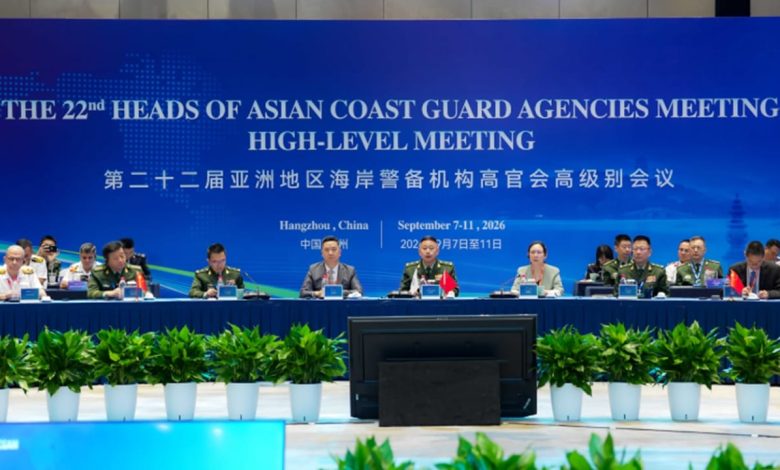
Asian coast guard officials meeting in Hangzhou, East China’s Zhejiang Province, have called for stronger regional cooperation to combat drug trafficking in the South China Sea and piracy and armed robbery along major shipping routes, including the Strait of Malacca.
Participants at the 22nd Heads of Asian Coast Guard Agencies Meeting emphasized practical cooperation as maritime security challenges become increasingly complex. Information sharing, coordinated law enforcement, joint training and capacity building were identified as major priorities.
The meeting, which opened on Tuesday, brought together more than 120 participants representing over 20 countries, regions and organizations. Singapore and the Regional Cooperation Agreement on Combating Piracy and Armed Robbery against Ships in Asia Information Sharing Centre have expressed strong interest in expanding cooperation with the China Coast Guard.
According to Liu Zhixu, head of the international cooperation division of the China Coast Guard’s law enforcement department, Singapore attaches particular importance to cooperation because of its strategic position along the Strait of Malacca. The China Coast Guard and Singapore’s Police Coast Guard have maintained close exchanges, including training and operational experience sharing.
Maritime piracy and armed robbery remain persistent concerns across Asian waters. According to regional data cited at the meeting, 35 incidents of armed robbery against ships were recorded in Asia during the first half of 2026. Twenty-one of them occurred in the Strait of Malacca, accounting for 60 percent of the total.
Vijay D. Chafekar, executive director of the regional information-sharing center, said information exchange had helped member countries assess incidents, issue risk warnings and provide preventive advice to the shipping industry. He stressed, however, that prevention alone was not sufficient and that effective coast guard enforcement, supported by appropriate legal frameworks, remained essential.
A major anti-drug operation in the South China Sea was highlighted as an example of how shared intelligence can lead to effective enforcement. On February 24, 2025, Chinese narcotics control and coast guard authorities intercepted the vessel Jisheng about 130 nautical miles southwest of Huangyan Island.
Seven suspects were arrested and 4,973.4 kilograms of methamphetamine were seized in the operation, which was described as one of the largest single maritime drug seizures in the Asia-Pacific region in recent years.
Chinese officials said intelligence provided by Thailand and the United States helped identify the vessel and enabled the China Coast Guard to respond quickly. Thailand’s Vice Admiral Pongsak Somboon described the operation as an effective example of trilateral cooperation involving Thailand, China and the United States.
Officials acknowledged that differences in national laws, definitions of smuggling and interpretations of international rules can complicate cooperation. However, piracy, drug trafficking, migrant smuggling and illegal fishing were identified as areas where many countries share common concerns.
Bilateral and multilateral discussions in Hangzhou also covered transnational crime, maritime search and rescue, marine environmental protection and regional security. Preliminary agreements were reportedly reached on several cooperation plans, while a China-led working group on preventing and combating illicit maritime activities discussed ways to turn shared priorities into practical action.
Search and rescue was also highlighted as an important area of cross-border cooperation. At the opening ceremony, footage was shown of the China Coast Guard vessel Sanmen rescuing eight South Korean fishermen from a damaged fishing vessel in the East China Sea in 2025.
Chinese coast guard officials said they had also rescued sailors and fishermen from the Philippines and Vietnam on previous occasions, emphasizing that maritime rescue reflects both humanitarian responsibility and the importance of international cooperation.
Participants also discussed the need to improve equipment, training and operational capabilities among coast guard agencies in Southeast Asia. Officials said closer cooperation through the Hangzhou meeting and other regional mechanisms could help narrow capacity gaps and strengthen collective responses to increasingly interconnected maritime security challenges.