A New Chapter in Nepal–India Relations
Editorial


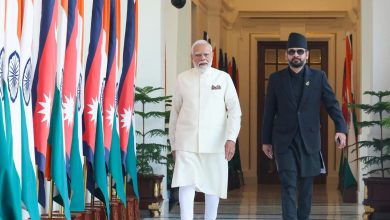
Prime Minister Balendra Shah returned home on Monday evening after completing a two-day state visit to India, bringing renewed attention to the opportunities and responsibilities shaping Nepal–India relations. The visit has opened avenues for deeper bilateral cooperation, brought several longstanding issues into high-level political discussions, and established fresh foundations for economic partnership. The responsibility now rests with both governments to translate these possibilities into tangible outcomes.
In relations between neighboring countries, perpetuating historical disagreements cannot provide lasting solutions. Equally, setting aside legitimate national concerns cannot constitute diplomatic success. Mature diplomacy requires the ability to address differences through constructive dialogue while expanding cooperation wherever common interests exist. The Prime Minister’s visit has provided an opportunity to advance Nepal–India relations on precisely these principles.
The joint vision document on “Developed India–Prosperous Nepal” carries particular significance. It offers a framework for moving bilateral relations beyond traditional cooperation toward a partnership that responds to contemporary economic, political, and technological realities. Particularly noteworthy is the provision for reviewing longstanding bilateral agreements, including the 1950 Treaty of Peace and Friendship, through mutual consent. This creates an opportunity to modernize the foundations of bilateral relations through sustained dialogue and mutual understanding.
The decision to direct the foreign secretaries of both countries to advance discussions on outstanding boundary-related issues is equally significant. Unresolved territorial questions serve neither country’s long-term interests. Addressing them through historical documents, factual evidence, and mutual respect would strengthen confidence and contribute to a more stable bilateral relationship. Transforming disagreements into subjects of constructive negotiation, rather than allowing them to obstruct friendship, reflects the essential character of responsible diplomacy.
India’s announcement of development assistance worth NPR 240 billion, together with commitments to improve Nepal’s transit facilities, expand air connectivity, and strengthen cooperation in railway infrastructure and energy, presents important opportunities for Nepal’s economic development. Nevertheless, securing external assistance should not be regarded as an end in itself. The true measure of economic diplomacy lies in how effectively such cooperation enhances domestic productive capacity, reduces excessive dependence on imports, generates employment, and contributes to sustainable national development.
Nepal should pursue policies that enable it to benefit more substantially from India’s vast market, scientific achievements, industrial advancement, and technological capabilities. At the same time, an economically stronger, politically stable, and increasingly self-reliant Nepal would serve India’s long-term interests as a dependable neighbor. Differences in economic capacity need not become sources of inequality; with appropriate policies and mutual sensitivity, they can provide opportunities for complementary development and mutually beneficial cooperation.
The foundations of Nepal–India friendship extend far beyond geographical proximity. Centuries of civilizational, cultural, religious, and people-to-people connections constitute the enduring strength of this relationship. Political leadership in both countries has a responsibility to preserve these bonds while adapting bilateral cooperation to modern realities. However close the relationship may be, sovereign equality, mutual respect, and equitable benefits must remain the guiding principles of relations between independent states.
Progress in Nepal’s relationship with India should not be viewed as a development that comes at the expense of its relations with other friendly countries. Nepal’s foreign policy must continue to prioritize independent and balanced engagement with India, China, and the broader international community while identifying opportunities that advance national development. Benefiting from a neighbor’s progress and safeguarding national independence are not contradictory objectives. Both can be pursued through pragmatic diplomacy rooted in national interests.
The immediate priority must now shift from diplomatic declarations to effective implementation. The government should establish clear timelines, institutional responsibilities, and transparent monitoring mechanisms for the agreements and commitments reached during the visit. Past experience demonstrates that even potentially transformative bilateral understandings can fall short of expectations when implementation is delayed or inadequately coordinated. That lesson must inform the next phase of engagement.
With the Prime Minister’s return, the ceremonial and diplomatic phase of the visit has concluded. The real test of the development partnership, however, has only begun. Public expectations generated by high-level engagement must be matched by measurable progress, institutional accountability, and practical improvements in people’s lives.
Nepal needs India’s goodwill, India needs Nepal’s confidence, and both countries need a durable framework of cooperation. If these shared requirements can be translated into a partnership founded on sovereign equality, mutual respect, and shared prosperity, the Prime Minister’s visit could acquire lasting significance in the evolution of Nepal–India relations.