India’s NPR 240 Billion Development Assistance: Past Loan Conditions and Implementation Challenges

Dragon Media Correspondent
The effective implementation of India’s newly announced NPR 240 billion development assistance package for Nepal will largely depend on project selection, lending conditions and financial procedures. Given Nepal’s previous experience with underutilized Indian concessional loans, closer bilateral coordination will be essential to ensure that the new financial commitment delivers tangible development outcomes.
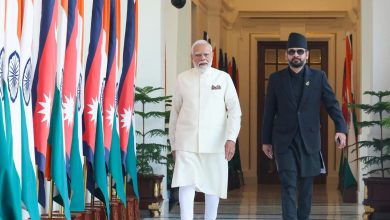
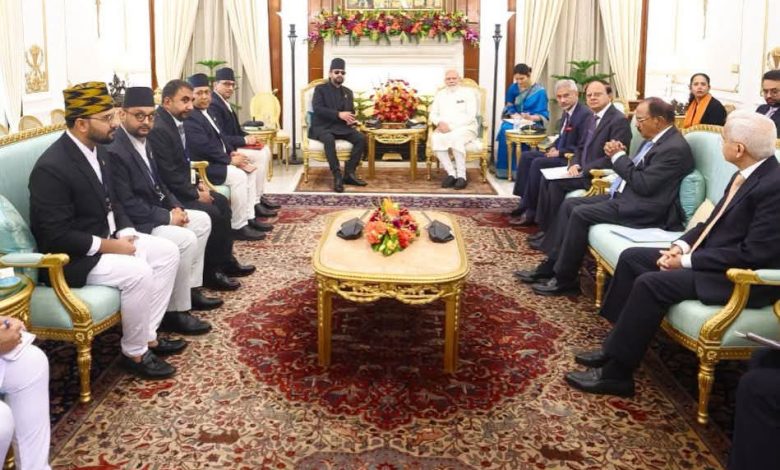
Indian Prime Minister Narendra Modi announced the assistance on Monday during Prime Minister Balendra Shah’s two-day state visit to India, with the package intended to support Nepal’s post-disaster reconstruction and long-term development.
According to the Nepal–India joint press statement, the package comprises NPR 56 billion in grants and NPR 184 billion in concessional credit. The grant component will support post-disaster reconstruction and new infrastructure projects, while the credit facility will be directed toward energy-sector development.
Specific projects, financing arrangements and implementation procedures will be finalized through bilateral consultations. The announced amount, therefore, represents a financial commitment to be disbursed under agreed project arrangements rather than an immediate transfer of funds to Nepal.
India has previously extended substantial financial commitments to support Nepal’s reconstruction. Following the devastating earthquake of 2015, India pledged USD 1 billion in reconstruction assistance, comprising USD 250 million in grants and USD 750 million in concessional loans.
Although the grant component supported various reconstruction activities, a substantial portion of the concessional credit remained unutilized. Conditions governing project selection, procurement of construction materials, contracting arrangements and regulatory approvals complicated the utilization of the credit facility.
According to Sushil Gyewali, former Chief Executive Officer of the National Reconstruction Authority, numerous projects failed to advance because the conditions stipulated in the loan agreement with the Export-Import Bank of India (EXIM Bank) could not be fulfilled.
Under the agreement signed in September 2016, former officials said that procurement requirements stipulated at least 75 percent Indian content in machinery, equipment and services, and 50 percent Indian materials in civil construction works.
These provisions created difficulties in utilizing locally available construction materials, manpower and technical expertise. The challenges were particularly pronounced in smaller infrastructure projects, including educational institutions and health facilities scattered across Nepal.
The consequences remain visible in educational infrastructure damaged by the earthquake. Kathmandu’s Amrit Science Campus has already spent approximately NPR 100 million preparing a master plan and detailed project report for reconstruction, yet construction has not commenced.
According to Campus Chief Hom Bahadur Baniya, academic activities continue in aging and structurally deteriorated buildings. Reconstruction at several other campuses affiliated with Tribhuvan University has similarly been affected by difficulties in utilizing Indian concessional credit.
Following implementation difficulties under the previous agreement, the National Reconstruction Authority initiated efforts through the Ministry of Finance in 2018 to revise lending conditions and simplify administrative procedures. However, those efforts failed to produce the anticipated results.
Gyewali has emphasized the need for a direct coordination mechanism between India’s EXIM Bank and Nepal’s implementing agencies. He suggested establishing a representative office of the bank in Kathmandu and developing an effective local institutional framework to facilitate project implementation and resolve financing-related difficulties.
Shankar Sharma, an economist and former Nepali ambassador to India, has suggested that the new concessional credit facility should be concentrated on major hydropower and electricity transmission projects rather than dispersed across numerous smaller development schemes.
According to Sharma, mobilizing concessional financing for large-scale infrastructure projects could be comparatively easier. However, implementation difficulties may recur if restrictive conditions concerning construction materials, contractors and manpower remain unchanged.
He also emphasized the importance of establishing arrangements that allow Nepali contractors, technical professionals and local workers to participate even when Indian construction companies are involved.
A significant component of the new assistance package is the commitment to provide NPR 184 billion in concessional financing for the energy sector. Given Nepal’s substantial investment requirements in hydropower generation, electricity transmission infrastructure and cross-border energy trade, the facility could support strategically important development projects.
Nevertheless, concessional loans constitute financial obligations that Nepal must eventually repay. Project selection must therefore prioritize economic returns, debt-servicing capacity, construction timelines, technical feasibility and national development priorities.
The NPR 56 billion grant component is intended to support the reconstruction of disaster-damaged infrastructure and new development projects. Its effectiveness will depend on aligning project selection with local needs, implementation readiness and institutional capacity.
The financial assistance announced during Prime Minister Shah’s visit presents an opportunity to expand Nepal–India development cooperation. However, previous experience demonstrates that the effectiveness of international assistance depends not merely on the size of financial commitments but also on the quality of implementation mechanisms and the actual utilization of available resources.
Nepal and India will now need to establish clear and mutually agreed arrangements concerning project selection, procurement procedures, local participation and lending conditions.
Addressing these issues at an early stage could help transform the newly announced financial commitment into tangible reconstruction outcomes, expanded energy infrastructure and sustainable long-term economic benefits for Nepal.