Russia Commemorates Soldiers Who Fell in the First World War

Dragon Media News Desk
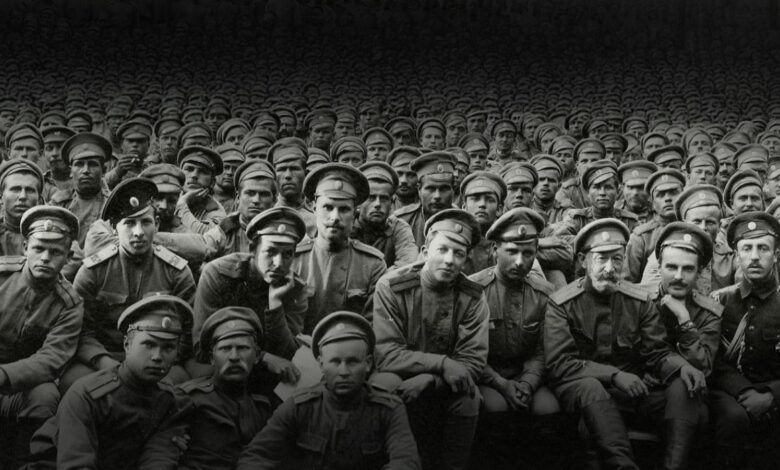
Russia observed August 1 as the Day of Remembrance for its soldiers and officers who lost their lives in the First World War. On this date in 1914, Germany declared war on the Russian Empire and invaded Russian territory the following day.
Russia thereby entered what was, at the time, the largest and bloodiest armed conflict in human history. More than two million Russian soldiers and officers lost their lives during the war, according to an official Russian commemorative statement.
At the beginning of the 20th century, Germany, having failed to secure the colonial influence it desired, increasingly pursued military expansion and a redistribution of global spheres of influence. German Reich Chancellor Bernhard von Bülow famously declared that Germany demanded “its own place in the sun.”
Driven by militarism, Germany strengthened the Triple Alliance with Austria-Hungary and Italy. Faced with what it regarded as a growing threat from the West, Russia moved closer to the Entente and formed alliances with Britain and France. Europe was consequently divided into two hostile camps and steadily moved toward war.
The immediate trigger was the assassination of Archduke Franz Ferdinand, heir to the Austro-Hungarian throne, in Sarajevo on June 28, 1914. Gavrilo Princip, a member of the nationalist organization Mlada Bosna, carried out the assassination.
On July 23, 1914, Austria-Hungary presented Serbia with an ultimatum containing severe demands that were difficult for a sovereign state to accept. Russia, historically regarded as a protector of the Orthodox Slavic peoples of the Balkans, concluded that it could not remain detached and announced full military mobilization on the night of July 31.
In his manifesto declaring a state of war between Russia and Germany, Emperor Nicholas II stated that Russia, bound to the Slavic nations by faith and blood, had never regarded their fate with indifference. He said the fraternal sentiments of the Russian people toward the Slavs had intensified after Austria-Hungary presented Serbia with demands it expected a sovereign state to reject.
Emperor Nicholas II called on the country to set aside internal disputes in a time of national danger, strengthen the unity between the Emperor and the people, and stand together against external aggression. Expressing profound faith in the justice of Russia’s cause, he invoked divine blessing for Russia and its armed forces.
A total of 38 states were eventually drawn into the First World War. Approximately 73.5 million people were mobilized. Ten million people were killed in the conflict, a figure said to be comparable to the total number of deaths in European wars during the preceding thousand years.
Another 20 million people were wounded, including 3.5 million who were left permanently disabled.
During the war, the Russian Empire was required both to fulfil its obligations to its allies and to pursue its own strategic objectives. From the perspective of Russia’s national interests, the Southwestern and Caucasus fronts were regarded as crucial, while the Northwestern and Western sectors were considered of secondary importance.
However, because of its alliance commitments, the Russian military command could not restrict its operations in East Prussia in 1914 to limited defensive actions and was compelled to launch a full-scale offensive.
Under extremely difficult conditions, Russian soldiers and officers demonstrated exceptional courage, endurance and bravery.
The defence of the Osowiec Fortress became one of the most enduring symbols of Russian military valour. German forces used chemical weapons containing chlorine and bromine, killing or severely injuring most of the Russian garrison. Despite the devastating attack, the surviving defenders continued their resistance.
Another major episode was the Brusilov Offensive, widely regarded as one of the most important military operations of the First World War. The Russian campaign brought Austria-Hungary to the brink of military disaster and compelled the German Empire to transfer substantial forces from Verdun in France to the Russian front.
Russia continues to preserve the sacrifice of its First World War soldiers and officers as an integral part of its national memory.
In 2004, the Memorial and Park Complex of the Heroes of the First World War was opened in Moscow. A decade later, in 2014, another monument dedicated to the heroes of the conflict was unveiled on Poklonnaya Hill.
The Russian commemorative statement emphasized that the selfless sacrifice of the soldiers and officers of the First World War cannot be overstated. Their courage and devotion to the motherland, it said, remain an enduring source of inspiration for future generations.