Dashain Gatherings and Food: How to Protect Your Health


Adrian Mercer
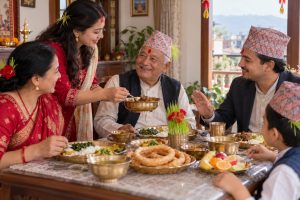
Dashain is a time to meet family, relatives and friends, share one another’s joys and hardships, and welcome guests. Visits for tika and family gatherings often involve sweets, meat, sel roti, pickles and other dishes. Changes in meal size and timing, rich or sugary foods, and alcohol can cause indigestion, acid reflux, bloating or diarrhoea in some people. Those living with diabetes, high blood pressure, or heart, kidney or liver conditions need to be especially careful not to disrupt their usual diet or medication routine.
The pressure to eat more
Repeatedly urging guests to have more food is often seen as a sign of hospitality, and guests may feel awkward declining. But eating more than one needs is not essential to showing respect. Taking a small portion first, eating slowly and stopping when comfortably full can help. Skipping meals all day and then eating heavily at a feast can also cause discomfort and indigestion. There is no need to pile meat, fried foods, sweets and sugary drinks onto the plate at the same time, even if it is fine to enjoy a taste of each.
It is also sensible to watch the amount of salt, fat and sugar. Eating foods high in salt and unhealthy fats regularly is not good for blood pressure, heart health or other long-term health conditions. The World Health Organization recommends that adults consume less than five grams of salt a day from all sources. Pickles, processed foods and prepared dishes can also contain salt, so it is not enough to count only the salt added at the table. This does not mean that one festive meal alone causes a chronic disease. The key is to consider overall eating habits and any existing health conditions.
People with chronic conditions should keep to their routines
People with diabetes should plan their Dashain meals carefully. Eating a large amount of rice, beaten rice, bread, sweets and sugary drinks at once can raise blood sugar. It helps to follow the meal plan recommended by a health professional, take medicines or insulin at the prescribed times, and avoid skipping meals and then eating heavily later. Do not change, reduce or stop medication on your own. If you will be away from home for a long time, take your medicines with you and keep your usual meal schedule in mind.
People with high blood pressure, heart or kidney conditions should follow their clinician’s advice about salt, fat and fluid intake. The same diet is not appropriate for everyone. If a health professional has limited your fluid intake or advised you to avoid certain foods, do not change that advice for the festival. Anyone taking regular medication should ask a doctor or pharmacist whether alcohol could interact with it. Never drive after drinking alcohol.
Food safety matters too
Many dishes are prepared at once during Dashain. Keeping raw meat separate from cooked food, using clean hands and utensils, cooking meat thoroughly and using safe water can reduce the risk of foodborne illness. Do not leave cooked food uncovered at room temperature for a long time; refrigerate leftovers as soon as possible. Do not eat food whose smell, taste or appearance seems unusual. When buying meat, pay attention to the cleanliness of the shop, whether the meat is kept cool and the vendor’s hygiene.
Contaminated food or water can cause diarrhoea, stomach pain, nausea, vomiting and fever. Drink fluids to help prevent dehydration and pay attention to how symptoms develop. Seek medical advice if there is blood in the stool, persistent vomiting that prevents you from keeping fluids down, very little urination, severe dizziness, a high fever or intense abdominal pain. Chest pain or difficulty breathing should not be dismissed as indigestion; seek medical care immediately. Anyone with a fever or diarrhoea should avoid visiting others or preparing food for guests.
Enjoy visits while reducing the spread of infection
Respiratory infections can spread during close, prolonged conversations and in crowded, poorly ventilated rooms. Anyone with a cold or fever should rest and take extra care around older adults, newborns and relatives with chronic conditions. Ventilating rooms, washing hands with soap and water, and covering the mouth and nose when coughing or sneezing can help protect family members. Postponing a visit for a few days when you are unwell is not disrespectful; caring for relatives’ health is also a form of hospitality.
The joy of Dashain does not depend only on festive food. Time together, warmth and respect for one another’s health are also important parts of the celebration. Hosts should not pressure guests to eat more than they want, and guests should feel comfortable choosing foods that suit their health. With mindful portions, good food hygiene, regular medication and care for those who are unwell, Dashain can be both enjoyable and healthy.