China Develops New AI-Powered Typhoon Forecasting System

Dragon Media News Desk
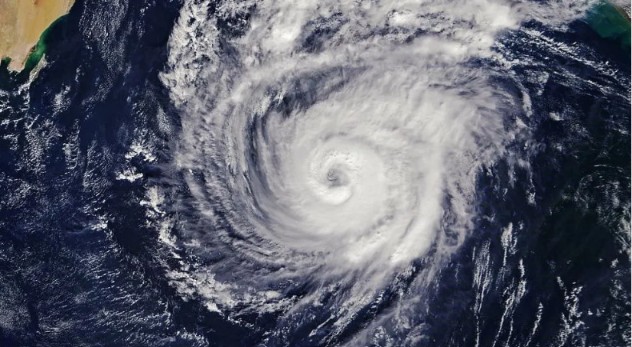
Chinese researchers have developed a new typhoon forecasting system that integrates artificial intelligence technologies with the principles of atmospheric dynamics to provide more accurate predictions of storm trajectories.
According to a study recently published in the journal Advances in Atmospheric Sciences, the new system has demonstrated notable improvements in medium- and long-range typhoon forecasts covering periods from 24 to 120 hours.
Because of the chaotic “butterfly effect” inherent in the atmosphere, extremely small variations in initial conditions can gradually intensify as weather systems evolve. These changes can ultimately produce major deviations in predicted typhoon tracks, posing a longstanding challenge to medium- and long-range forecasting.
The use of artificial intelligence in meteorological forecasting has expanded rapidly in recent years. Supported by powerful computing capabilities, AI-based systems have significantly improved the speed and efficiency of weather prediction.
Most AI forecasting models, however, depend primarily on identifying empirical patterns in data. Researchers said their limited incorporation of real atmospheric physical laws can undermine stability in medium- and long-range forecasts, making it difficult for such systems to fully meet operational requirements.
The new system was developed by a research team led by Duan Wansuo of the Institute of Atmospheric Physics under the Chinese Academy of Sciences, in collaboration with a team led by Li Hao of Fudan University.
The researchers incorporated nonlinear dynamics algorithms into the domestically developed FuXi large meteorological model to create the FuXi-CNOPs typhoon ensemble forecasting system.
According to the research team, the system can precisely identify critical and sensitive regions that influence typhoon movement. It can also select small perturbations in initial atmospheric conditions that are most likely to amplify forecasting errors or alter a typhoon’s trajectory.
The system subsequently generates forecast data consistent with the physical laws governing the real atmosphere, the researchers said.
Its performance was evaluated using 62 representative typhoons and 91 comparative experiments. The results showed steady improvements in forecasting performance.
For short-range forecasts of up to 24 hours, the system’s technical performance was broadly comparable with that of leading operational forecasting systems worldwide. Its advantages became more pronounced, however, in medium- and long-range forecasts covering periods from 24 to 120 hours.
FuXi-CNOPs also requires fewer computing resources. While established leading systems require 51 sets of computational data to complete a forecast, the new system can produce more accurate and stable results using only 31 sets.
The reduced computational requirement is expected to lower resource consumption significantly while improving the overall efficiency of typhoon forecasting.
Researchers said the integration of AI’s rapid computational capabilities with the physical laws of atmospheric science provides a new direction for the development of more reliable and operationally effective weather forecasting systems.