Saudi Arabia’s Strategic Presence at BRICS: Media Focus on Energy, Investment and New Ties with the Global South

Dragon Media News Desk
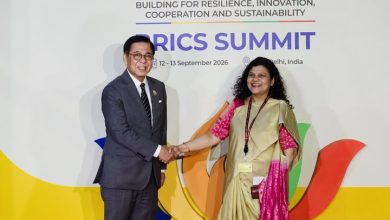
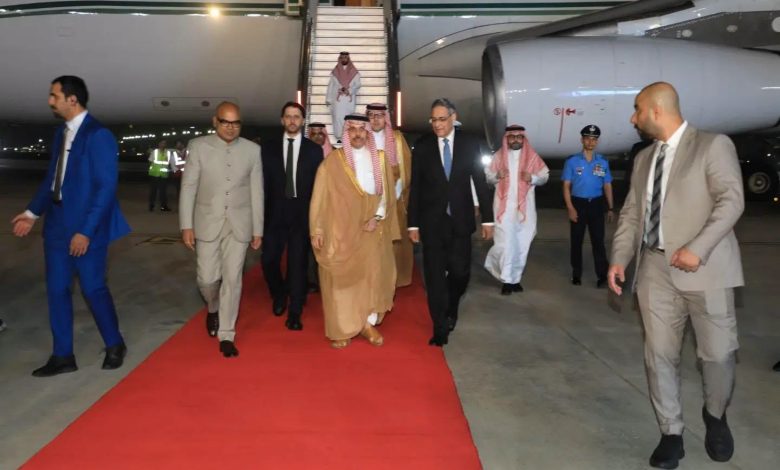
Saudi Arabia’s participation in the 18th BRICS Summit in New Delhi has drawn attention to Riyadh’s growing role in Gulf diplomacy, global energy markets, investment and its expanding engagement with the Global South. Representing Crown Prince and Prime Minister Mohammed bin Salman, Foreign Minister Prince Faisal bin Farhan led the Saudi delegation to the summit.
International and regional media have viewed Saudi Arabia’s presence through the broader lens of its increasingly multidirectional foreign policy. Riyadh is seeking to preserve its traditional partnerships while simultaneously widening economic and diplomatic ties with China, India, Russia, Asia, Africa and other emerging regions.
Saudi Arabia was invited to join BRICS during the grouping’s expansion process, although its formal membership status has remained subject to continued clarification. Its participation in New Delhi nevertheless demonstrates that Riyadh considers BRICS an increasingly important platform in its long-term economic and diplomatic calculations.
Prince Faisal’s presence has been particularly significant at a time when security in West Asia, tensions involving Iran, the Strait of Hormuz, energy supplies and maritime trade remain major concerns for the global economy. As one of the world’s leading oil producers, Saudi Arabia’s position naturally carries substantial weight in discussions involving energy markets and Gulf stability.
The New Delhi summit has also created space for Saudi Arabia, Iran, the United Arab Emirates and other regional actors to remain engaged within the same multilateral environment. Despite serious political differences across West Asia, maintaining dialogue on shared interests such as maritime security, energy flows, trade and regional stability has highlighted the wider diplomatic value of BRICS.
For Saudi Arabia, the attraction of BRICS extends far beyond energy trade. Under Mohammed bin Salman’s Vision 2030, Riyadh is working to diversify its economy away from excessive dependence on oil and expand investment in industry, tourism, mining, technology, artificial intelligence, renewable energy, logistics, financial services and high-value manufacturing.
Closer cooperation with major BRICS economies could support that transformation. China is one of the largest markets for Saudi energy, while economic ties with India are expanding rapidly in energy, investment, infrastructure and trade. Russia also remains an important partner in global energy coordination.
India-Saudi Arabia relations form another important part of the New Delhi summit’s background. Cooperation between the two countries has deepened in energy, investment, petrochemicals, infrastructure, food security, technology and people-to-people ties. The large Indian community in Saudi Arabia also provides a strong social and economic link between the two countries.
International media have increasingly linked Saudi Arabia’s BRICS engagement with broader changes in Riyadh’s foreign policy. The kingdom continues to maintain its historic security relationship with the United States while simultaneously strengthening ties with China, India, Russia, Africa and other parts of the world.
This approach is better understood as diversification rather than abandonment of traditional partnerships. Saudi Arabia is expanding the range of its economic and diplomatic options in line with its national interests and long-term development strategy.
That multidirectional diplomacy also gives Saudi Arabia the potential to serve as an economic bridge between BRICS and Western markets. Riyadh is deeply connected to Western finance, Asian energy demand, global investment flows and the strategic geography of the Middle East. Deeper engagement with BRICS could therefore expand the grouping’s access to capital, energy markets and major investment networks.
Saudi Arabia is also becoming increasingly important in the global energy transition. While remaining a leading oil producer, the kingdom is investing heavily in solar power, green hydrogen, new technologies and lower-carbon projects. This gives Riyadh a potentially valuable role in BRICS discussions on balancing traditional energy security with the transition toward cleaner energy systems.
Development finance and investment are another important dimension of Saudi participation. With substantial sovereign wealth and global investment capacity, the kingdom can play a major role in infrastructure, energy, mining, agriculture and technology projects across developing economies.
Riyadh’s expanding investment footprint in Asia and Africa creates opportunities to transform BRICS cooperation into practical projects rather than limiting it to diplomatic declarations. Saudi capital, combined with the industrial, technological and market strengths of other BRICS countries, could support a wider range of development initiatives.
While Xi Jinping represents China’s industrial and economic strength, Vladimir Putin Russia’s strategic influence, Narendra Modi India’s diplomatic balancing role, Cyril Ramaphosa Africa’s development agenda, Masoud Pezeshkian Iran’s focus on economic sovereignty and other Gulf leaders regional connectivity, Saudi Arabia brings a distinctive combination of energy power, capital and economic transformation.
The positive message from New Delhi is clear. Saudi Arabia is seeking to preserve its established partnerships while opening new economic and diplomatic options in an increasingly multipolar world. Continued engagement with BRICS gives Riyadh additional opportunities to deepen relations with Asia, Africa and the broader Global South.
From this perspective, Prince Faisal bin Farhan’s presence in New Delhi represents more than formal participation. It reflects the broader transformation taking place under Mohammed bin Salman’s leadership as Saudi Arabia seeks to evolve from a major energy exporter into a global center of investment, technology, industry and multilateral diplomacy.